
It means so much when you meet someone that helps you open all these doors in your mind, it’s like ‘Wow, this is possible!’ Because growing up in this super small town in Costa Rica, it’s very beautiful, we have a lot of nature and people are super kind, but they’re still… Through colonization, Christianity was brought into the culture and in Costa Rica, Christianity is still very homophobic. I know that in other countries, it’s not that way, but there it is.
“First we were really good friends, and then we started kissing…”
So, living in this really small town where there were no people who were out or openly gay or openly queer, it was always something that you had to do or be in secret. I had a partner when I was very young, like 13 or something, first we were really good friends, and then we started kissing… Everybody was like ‘Oh yeah, they are such good friends’, but we were actually partners. But we couldn’t kiss in public, for example, we were always so scared that her parents would see us, because they were also super homophobic, and at school, teachers would also be talking about us… I don’t know how we knew that, but we knew that some teachers were saying things about us being together.
L: How did you manage to maintain your relationship in that climate, how did you actually manage to find a space where you could just be together?
Well, we actually… That was one of the reasons why our relationship ended. We were together for three years or something, and we we went a lot into nature, we also still went to her house, and her parents were still there, and her parents hated me because they thought I converted her into a gay person, you know, that it was my fault or something. But we still went there, and we still watched movies together, made popcorn and made music together…
My parents were a bit more okay with it, my mom was always like ‘Are you gonna invite Steph?’ They still thought we were good friends, but yeah, that’s ok. But we also had a couple of other queer friends, so we also just hung out a lot. Steph did skating, so we were always somewhere in town and she was skating and I was just listening to music or something, and that was also really nice, just being outside. It was nice for the time that it lasted.
L: It sounds difficult being surrounded by so much hostility.
Yeah. But I think that also, in a sense, it makes you realize how strong love can be. Like how strong connections can be, even if other people say things against it. If you wanna be with someone and you wanna have a nice time with someone, you just do it, you know, because that’s what makes you happy. So yeah, I think that’s something that I learnt from that.
“It makes you realize how strong love can be, how strong connections can be, even if other people say things against it.”
L: Just before we started, we also talked about connections, would you like to revisit that?
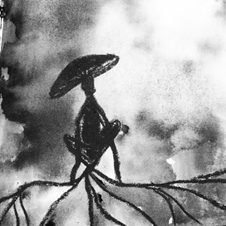
I was saying that we have this peer support system at my university, and that made me think about mushrooms and the mycelium network… ‘Cause mushrooms, what we normally see, are just the fruit in that sense of the whole fungi system, and the fungi is actually what’s down in the earth.
It’s this magical transformative network of connections, that also connects trees and other plants and feeds the plants and is busy with decomposing rotten leaves and dead animals. It’s this super transformative network of connection. It transforms death into life and life into death, and I just really like that concept, and always, when I imagine community, I imagine the mycelium network. It’s a guide and a symbol for community.
For more thoughts about the mycelium network and fostering connections, Soph recommends Episode 4 of the Wild Weeds Podcast.
L: That’s a beautiful image for communities! It also seems to be reflected in the work you wanna do there…
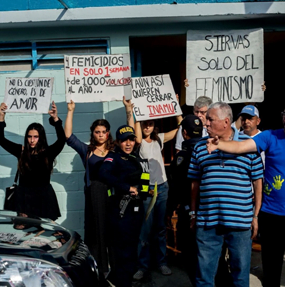
Yeah, exactly. Actually, when I decided to come study here in the Netherlands, I was still part of an intersectional feminist collective in my town, called Malas Hierbas. We started that collective in response to the rise in femicides and the complicity of the state in the impunity of sexist violence. Our first action took place during the presidential elections in which the leading candidate was a Evangelic Christian who was gaining popularity through homophobia and sexism.
My idea when I came here was kinda to lear art therapy and then come back, working on that project with my friends. But of course, plans change, and now I’m like ‘Oh, Groningen is actually cool’ [laughs]. So, I don’t know what’s gonna happen.
