
L: You mentioned that you feel very connected to plants, could you maybe talk about what got you into plants and what interests you about them now?
As I said, I grew up in this small town, very close to the Carribean side of Costa Rica. It’s super tropical, there’s a lot of rivers and different eco systems, and my parents work with nature, so I was always in nature, getting my feet dirty and climbing on trees…
I also went to a Waldorf school, so we had walks in the morning all the time, in nature, and the teachers were always like ‘When you walk in nature, you have to be careful, because there’s other beings there, there are animals, there’s little plants, don’t step on all of them!’ And then we would go back to school and draw plants and reflect on how it was, walking in nature. So, that was one of the first moments when I started relating to nature more mindfully, I guess. Then that kind of faded out…
And then, when I was, I think, 16 years old, I had an eating disorder, and I… was feeling like shit, obviously, but I knew that it wasn’t about my body, it wasn’t about my appearance. It was also influenced by comments of people related to my sexuality and queerness, I guess, although I didn’t know it at the time. It was all about how ‘manly’ I was, how little femininity I had, and I kind of internalized this like ‘Something is wrong with my body’, you know? That influenced a lot how I perceived myself, and that led to my eating disorder. Together with other things, but that’s one of the things that I’ve spotted. So, I started looking for therapists, and I found this one who worked with art and plant medicine and Bach flowers, and I was like ‘Oooh, that sounds like something I could do!’ Because I’ve always been into art and music and creativity. So, I started going to therapy.
“I started to get more interested in how plants act upon our bodies, and not only our physical body but also our thoughts and our emotions.”
Bach flowers are like tinctures, there is this whole flower system that was developed by Dr. Bach, and he talks about the energy that plants have, the crystals that they form in water… I don’t know that much about Bach flowers, honestly, I just know that they work. So yeah, I started taking them and having a lot of therapy with art. That’s how I got so interested in art therapy. And then I started to get more interested in how plants act upon our bodies, and not only our physical body but also our thoughts and our emotions.
I mean, for me it makes a lot of sense, because everything that’s alive has something inside, some kind of life force, some energy. I think you have to be very silent in your mind to be able to actually feel it. Sometimes when I talk about this, I’m afraid that people are gonna be dismissive, but in the end, I really feel it when I’m close to a tree, I can feel that it has some effect on me. Sometimes I can’t spot the exact place in my body where I feel it, but it’s something, it feels like there’s something there.
“You have to be very silent in your mind to be able to actually feel it.”
And so I started reading more about plants, getting more into nature and just sitting next to a tree, writing about what I’m feeling, just letting my experience guide me, kind of, like ‘this plant feels good, this feels good’. Also doing a lot of research into the scientific knowledge that’s available on plants and stuff, but I try to let that a bit aside and first get to know plants through relating to them and kind of going like ‘Okay, so this is how I feel about it’, and then going into scientific knowledge about the plant. And very often, those things fit together.
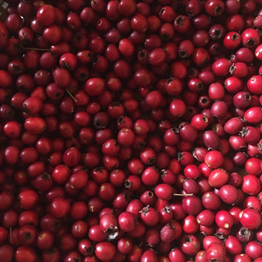
For example, close to the place where I’m living now, there’s these hawthorn trees, and I think it was already a year ago, in spring, and I was walking, biking around the neighbourhood, and I started seeing these super beautiful trees with white flowers. And I don’t know, I started feeling like ‘There’s something with these trees, they feel good when I see them’. It was really nice. And then I started sitting around them, walking where they were, and I started feeling like every time I was with them, I could feel warmth in my heart. You know, when sometimes you just feel anxiety, you can feel it in your heart, but you can also feel peace in your chest, just some warm feeling, and I was feeling that.
“Being led by my feelings and my experiences is super valid.”
And then I just started collecting some flowers… I’m very cautious with taking things from trees and plants that I don’t know very well, I just like taking it slow, but yeah, I did that, and I started drinking teas with the flowers in them, taking showers with the flowers, just trying things out, experimenting. It made me feel good. And then I was like ‘Okay, I now know that this tree affects my heart in a nice way, so I’ll start doing research about it’, and turns out, hawthorn actually helps with the circulatory system, and it helps with heart issues, and I was like ‘Ha, see?’ [laughs]. So that was really cool, to see how being led by my feelings and my experiences is also super valid.
That’s also where for me the anarchist part comes in, by kind of stepping out of this idea that we are above nature, that we can understand nature from a higher perspective. There’s this really cool zine that’s called Towards an Anarchist Ecology, and they talk about the dominator ecology, like how a lot of people studying nature actually look at it as an authority, you know, like ‘We can understand nature, we can make sense of nature, and we can say what nature is’. I mean, there’s room for further research, right, that’s how science works, but still, there’s this idea that if I want to know this plant, I have to go to these authorities that know better than I do how it feels to be in a relationship with this plant.
They also talk about the importance of building a relationship with nature and not just looking at it as something that is not alive or that doesn’t have an autonomous experience. That’s for me where anarcho-herbalism comes in, just taking my experiences into reality, and I don’t have to look to any authority to tell me ‘This is valid’ or ‘This is not valid’, you know? More like ‘This is how I feel about it, and I’m gonna trust this, and I’m gonna do it!’
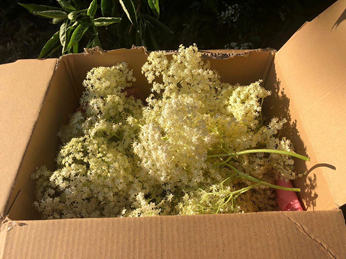
At the moment I focus on making herbal medicine for myself and friends. I try to forage most of the plants myself. I make tinctures, infusions, decoctions, which are all fairly easy methods to extract and ingest the phytochemicals that have healing properties on our bodies. I plan on starting a course this year to deepen my knowledge so I can share that with people around me. Herbalism has been part of many cultures and has been a powerful tool of resistance and health autonomy used by many marginalized groups. This really inspires me…
L: That’s really interesting, especially about that hierarchy that we often draw between humans and other parts of the world, and how that manifests in what we think we know about those parts of the world and how we can then interact with them.
Exactly, yeah, also with other animals, right? That we kind of measure other animals with our standards… There is this Netflix episode by Explained, they talk about this experiment that they did with animals to see how intelligent they were. It’s with a mirror, and if the animals could recognize themselves, that meant that they had a certain level of intelligence. And that’s so… that’s so human-centric. Measuring other parts of nature with what we know of ourselves, which is also so restricted, right, what we know of ourselves. That’s generally very important for me, the part with other animals, like not imposing my needs and what I want on them.
L: You already gave some examples for this, but could you maybe tell me more about how you are creating spaces for your thoughts and ideas, and for sharing that with other people? For example through art therapy?
I think one of the basic things for me and one of the main ideas behind most of the things that I do are super anarchist; and I’m always looking for ways to reconnect myself with myself, and liberating myself from preconceived ideas of how things should be and how they should look and how they should feel, because from my experience, very often what people have said was right or wrong wasn’t that way for me, you know? For my body, for the way I felt for people, with my partner… The whole environment was telling me No, but my body and my heart and my feelings were saying Yes.
“The whole environment was telling me No, but my body and my heart and my feelings were saying Yes.”
What I really like about art therapy is that it’s not focused on creating something beautiful, but on creating something authentic that really gives a voice to your experience. Be it something beautiful or something horrible.
Sometimes, I get super mad, and I just get this big piece of paper and black paint and just go ‘Urrrgh’, making super hard lines with materials, or throwing things onto a wall with paint, like just exploding and giving voice to those difficult feelings that we’re also taught are not good, you know? I’m in general trying to be nonbinary [laughs], like with most things. There’s no good and bad, you determine for yourself what you need, and what feels good from inside. And I feel like art therapy really gives space for that. ‘Cause there’s also not really an authority that’s gonna tell you ‘This is good, this is bad’, you determine this, so that’s really nice.
And that’s what I really want to share with people with art therapy, like there’s all these methods, all these meditations, all these guides where people can share their experience and how they healed themselves, how they made life a bit easier for themselves, you know? Because we’re all struggling. But I feel like it’s super important for us, especially as like queer, neurodivergent weirdos [laughs] to really connect with ourselves and look for ways to inhabit spaces in the world in a way that feels good for us.
“There’s no other person who can know better what you need than you.”
There’s no other person who can know better what you need than you. You’re the best guide for yourself when you start connecting to your needs and to what you really want, and start getting all those preconceived shoulds and don’ts out and start connecting to what feels good to you. And lean into what gives you pleasure, really. What makes you happy, what gives your body pleasure. Sometimes I’m so tense in my body, and I’m like ‘I need something to let this out’, and then I make something and that’s pleasure for me, to really be able to inhabit my body peacefully, you know? But we all have different pleasures.
